Upsell and Cross-Sell Without a Dedicated Team
In enterprise business models, increasing customer lifetime value through account expansion is universally recognized as the most profitable growth lever available.
Selling an additional service tier, expanding software user licenses, or cross-selling a complementary operational module to an existing client costs a fraction of acquiring a brand-new customer. Trust is already established, legal agreements and master services contracts are active, and payment mechanisms are in place.
Yet in most mid-sized and growing companies, account expansion happens sporadically.
Sales representatives focus their primary attention on chasing new logos to meet quarterly new-business quotas. Customer success managers and account directors, consumed by day-to-day delivery firefighting and client inquiries, rarely have the cognitive bandwidth to analyze accounts for expansion potential.
To solve this, executive leadership often contemplates establishing a dedicated account management team—hiring specialized account executives tasked exclusively with hunting for upsell and cross-sell revenue within the existing customer base.
Yet standing up a dedicated expansion team carries heavy overhead. It adds significant fixed payroll, creates awkward territory overlap with existing relationship managers, and often results in clumsy, unsolicited sales pitches that irritate long-standing clients.
The reality is that you do not need an army of dedicated account executives to expand customer value.
The data required to identify the next natural, high-probability purchase is already sitting inside your operational software. It is recorded in project milestones, service utilization logs, support ticket histories, and billing records.
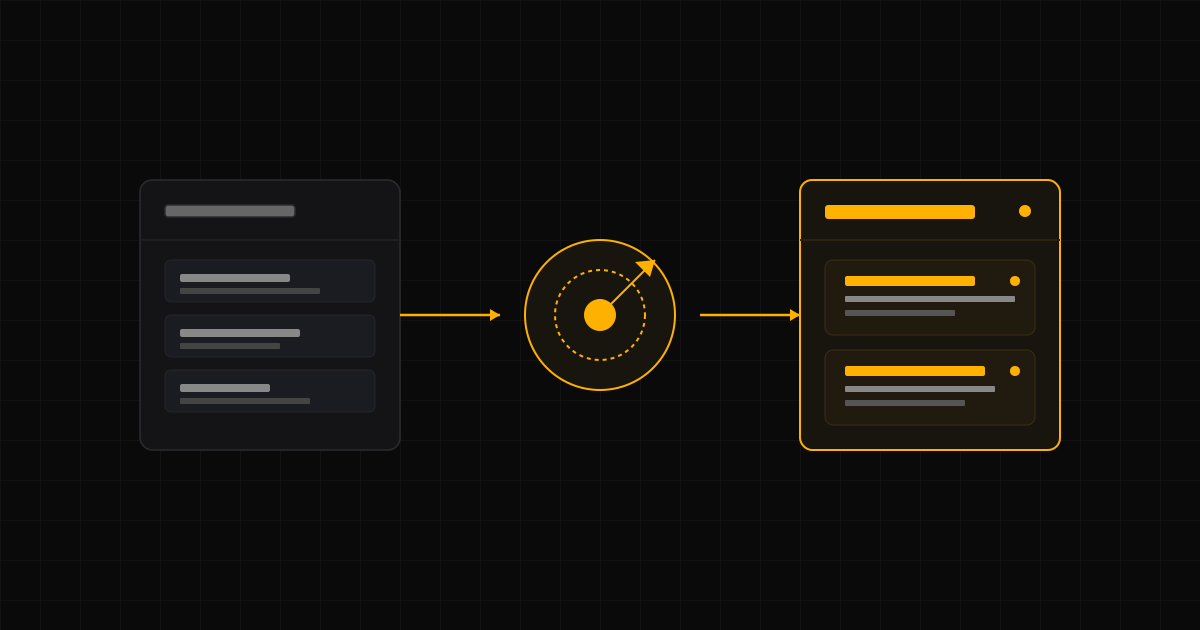
Learning how to synthesize this data into an automated expansion engine through structured upsell automation cross-sell architecture allows companies to expand account revenue continuously on existing operational resources.
The hidden signals sitting inside your existing tools
When an existing client reaches a moment where an upsell or cross-sell makes genuine commercial sense, they do not send an email asking for a sales brochure.
Instead, their operational behavior changes. They generate clear, measurable signals inside the software platforms your business uses every day:
1. Capacity and utilization thresholds
In service, software, and operational delivery, client consumption is recorded continuously.
A client consistently hits ninety-five percent of their contracted monthly transaction allowance. An enterprise customer consumes their allocated project hours two weeks ahead of schedule. A software client actively provisions ten new user seats in a single month.
These consumption spikes indicate immediate, organic demand for capacity expansion. Yet because billing software is disconnected from account management, the signal sits unobserved in an accounting database until months later.
2. Operational milestone completions
The moment immediately following a highly successful project milestone is when a client is most receptive to discussing subsequent phases.
Delivery teams finish deploying an initial system on time and under budget. The client sponsor is delighted.
In traditional operations, delivery marks the milestone complete in their project tool and moves to another project. The commercial opportunity to propose Phase 2—while executive goodwill is at its peak—is completely missed because delivery tools do not trigger commercial workflows.
3. Complementary service trigger patterns
A client submits recurring support tickets or project inquiries regarding a technical capability that falls outside their current contract scope.
For example, a client contracting your team for logistics coordination repeatedly asks questions about customs clearance or warehouse staging.
These inquiries are not support problems; they are commercial buying signals indicating that the client is experiencing operational pain in an adjacent service line your business provides.
Why manual account expansion fails
If these expansion signals are already recorded inside corporate databases, why do companies struggle to monetize them?
Manual expansion models break down across three systemic hurdles:
1. The data fragmentation barrier
Operational telemetry is locked in departmental silos. Utilization data lives in the ERP; milestone completions live in project management software; support requests live in ticketing portals; commercial contract histories reside in the CRM.
No individual employee has the time or capability to manually aggregate records across four disparate databases for hundreds of client accounts every week.
2. The aggressive salesperson stigma
Account directors and technical delivery managers frequently resist making commercial pitches to their clients.
They view themselves as trusted advisors and fear that proposing additional services will make them look like aggressive salespeople, damaging the client relationship. Because they hesitate to initiate commercial conversations, opportunities remain unmentioned.
3. The timing mismatch
Manual account reviews typically occur on a rigid calendar: quarterly business reviews or annual contract renewal meetings.
Commercial needs, however, arise organically and unpredictably. If a client experiences a surge in transaction volume in February, waiting until the scheduled June quarterly review to propose a capacity upgrade means the client either struggles through operational delays or finds an interim third-party solution.
The architecture of an automated expansion engine
Unlocking account expansion without standing up a dedicated sales team requires establishing an automated operational layer that monitors account telemetry and frames expansion proposals contextually.
This architecture operates across four systematic stages:
1. Continuous account telemetry aggregation
The system monitors customer activity across operational databases in real time: tracking service utilization rates, project delivery milestones, recurring support inquiries, and billing trends.
Disparate data streams are synthesized into a consolidated, live account health and readiness profile.
2. Algorithmic expansion threshold triggers
Define objective business rules that indicate high-probability expansion moments:
- Rule A (Capacity): When a client exceeds eighty-five percent of contracted service limits for two consecutive billing cycles, trigger a capacity expansion workflow.
- Rule B (Milestone): When a major project deliverable receives formal digital sign-off and positive feedback telemetry, trigger a Phase 2 scoping workflow.
- Rule C (Adjacency): When an account logs three support inquiries regarding an uncontracted service line, trigger an adjacent capability briefing.
3. Contextual, value-first proposal framing
When a trigger fires, the system does not dispatch a generic sales email. It automatically drafts a tailored, contextual commercial briefing:
- It highlights the client's current operational success or utilization pattern.
- It identifies the emerging constraint: "We noticed your transaction volume has scaled twenty-five percent this quarter, approaching contractual thresholds."
- It frames the solution as operational protection: "Upgrading your tier now ensures uninterrupted processing and unlocks favorable volume pricing."
4. Empathetic account manager handoff
Rather than bypassing the relationship owner, the automated layer packages the briefing and delivers it directly to the existing account director or relationship manager.
The account manager does not have to hunt for numbers or make an awkward sales pitch.
They simply review the pre-assembled commercial briefing, personalize the message with one click, and deliver a helpful, data-backed recommendation to their client sponsor.
Compounding expansion revenue on existing operations
When account expansion is driven by objective operational telemetry rather than ad-hoc sales pitches, the commercial dynamic transforms:
High conversion velocity
Clients rarely object to expansion recommendations when the proposal is directly supported by their own operational data. Because the recommendation addresses an active, observable business need, approval cycles are rapid and friction-free.
Strengthening trusted-advisor status
Proactively alerting a client that they are outgrowing their tier or recommending a complementary workflow that prevents delivery bottlenecks positions your firm as an attentive, indispensable partner rather than an opportunistic vendor.
Maximizing net revenue retention without payroll expansion
By leveraging existing data to drive expansion, net revenue retention increases steadily year over year without expanding sales payroll or hiring dedicated account executives.
The business extracts maximum lifetime value from every customer won, driving high-margin enterprise growth.
This is the kind of work Kalvron builds systems to run continuously. By deploying connected AI systems that monitor account telemetry, detect commercial triggers, and frame contextual expansion proposals directly inside existing tools, organizations scale upsell and cross-sell revenue systematically without hiring dedicated sales teams.
Find out what your business can stop doing by hand.
In 20 minutes, we map your workflow and show you where an AI OS fits. No pitch. Just the diagnosis.
Book a call