Five Signs Your Operations Are the Bottleneck, Not Your Sales
When enterprise revenue growth hits a plateau, executive committees almost invariably look toward the commercial team.
The immediate questions follow a predictable pattern. Are incoming lead volumes dropping? Are account executives discounting too heavily? Should the business increase performance marketing spend or hire additional business development representatives?
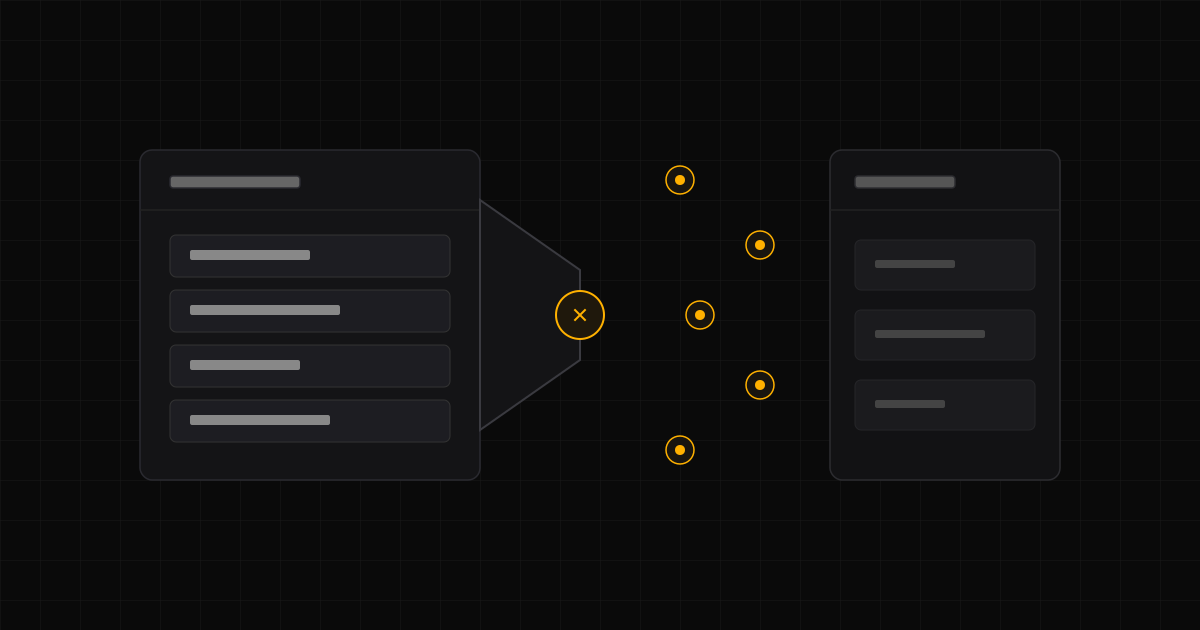
In many mid-sized and expanding enterprises, however, commercial performance is not the constraint. Marketing is delivering qualified demand and sales reps are closing contracts. The true constraint sits downstream. When execution teams lack the operational capacity to absorb new business, the organization quietly chokes on its own success.
An unaddressed operations bottleneck in a growing company creates a compounding drag on the entire enterprise. As delivery timelines stretch and customer onboarding stalls, newly won clients become frustrated before receiving their first deliverable. Client service teams shift their energy from account expansion to damage control. Staff work late to move files between incompatible screens, and margins degrade as overtime and rework accumulate.
Adding sales pipeline into a constrained delivery engine does not produce revenue growth. It produces operational failure.
According to the 2026 Connectivity Benchmark Report published by Salesforce and MuleSoft—commercial vendors with an interest in promoting enterprise software integration—the average organization manages 957 distinct applications, yet only 27% of those systems are connected. When nearly three-quarters of corporate software tools operate in isolation, every handoff between sales, finance, and delivery depends on human manual intervention.
Furthermore, a 2026 study by Deloitte surveying 501 senior leaders found that only 5% consider their operational processes to be highly prepared for autonomous execution. The remaining 95% continue to rely on manual workflows that inevitably buckle when transaction volume doubles.
Recognizing whether your business has hit an operational ceiling requires looking past sales pipeline dashboards. Here are five concrete, observable signs that your operations are the bottleneck capping company growth.
Sign 1: Sales closes contracts, but time-to-value steadily lengthens
In a healthy operational environment, onboarding velocity remains consistent as client volume expands. When operations becomes the bottleneck, the interval between contract signature and initial value delivery begins to drift outward.
During early growth stages, an onboarding team might activate a new client in five business days. As transaction volume scales, that timeline stretches to fifteen, thirty, or forty-five days. The delay rarely stems from the technical complexity of the client's requirements. Instead, it occurs because incoming contracts wait in an unassigned queue while team members manually review documents, set up software accounts, copy contact information into billing ledgers, and chase internal stakeholders for approvals.
When clients wait weeks to see the first tangible output of a service they purchased, buyer remorse sets in immediately. Early goodwill evaporates, setting up a fragile relationship that struggles to survive its first annual renewal.
Sign 2: Account managers spend more hours defending deadlines than expanding accounts
The primary commercial role of account managers and client directors is to secure client outcomes, maintain relationships, and identify expansion opportunities. In operationally constrained businesses, their calendar tells a very different story.
Instead of conducting strategic account reviews or introducing complementary services, account managers spend their mornings tracking down missing deliverables. They sit in internal status meetings asking why promised assets are late, reconciling mismatched project timelines, and drafting apologetic emails to client executives.
When relationship owners operate as full-time complaint handlers, account growth stalls. They cannot pitch expanded scope to a client who is currently waiting on overdue deliverables from last month's milestone.
Sign 3: Handover meetings multiply while operational context evaporates
When work flows cleanly between departments, information captured during the sales discovery process travels directly into execution systems. When operations is constrained, organizations attempt to bridge the gap by scheduling internal meetings.
Sales reps, project leads, and department heads gather for weekly handover calls to explain client requirements that have already been documented across emails, call recordings, and proposal decks. Despite these lengthy discussions, critical details slip through the cracks. Technical specifications get forgotten, billing terms are entered incorrectly into accounting ledgers, and delivery teams build deliverables that conflict with initial promises.
The multiplication of internal coordination meetings is one of the most reliable indicators of operational friction. Teams spend more hours discussing the work than executing it.
Sign 4: Senior leadership spends peak hours resolving operational exceptions
In a well-structured operating model, front-line staff execute standard processes autonomously, while executive leadership focuses on market expansion, hiring, and capital allocation.
When operations becomes the bottleneck, standard processes break down under volume, generating an endless stream of exceptions. Invoices cannot be generated because custom terms were not logged. Deliverables fail quality checks because intake briefs were incomplete. Client escalation emails land directly in the founder's or chief operating officer's inbox.
When senior leaders spend their mornings untangling cross-departmental disputes and expediting overdue client orders, the business has lost its operational independence. Leadership attention becomes fully consumed by firefighting, leaving no cognitive capacity for strategic development.
Sign 5: Revenue forecasts miss even when closed-won bookings exceed targets
Perhaps the most alarming symptom of an operational bottleneck appears on the income statement. The sales dashboard shows a record quarter with closed-won bookings well above target, yet recognized revenue and operating cash flow lag substantially behind.
Because revenue cannot be recognized until services are delivered or milestones are formally accepted, delayed operational execution directly postpones cash realization. The business carries the customer acquisition cost and upfront sales commissions on its books, but cannot bill or collect the underlying service fees.
The result is a severe working capital squeeze: the company appears highly successful on sales leaderboards while experiencing acute cash pressure in bank accounts.
Deconstructing the bottleneck: Process before technology
Solving an operations bottleneck does not begin with purchasing additional point solutions or hiring a larger coordinator team. Adding more personnel to an uncoordinated workflow merely increases communication overhead. As team size grows linearly, internal communication channels multiply exponentially, compounding delay.
Resolving operational constraints requires a systematic approach to workflow architecture:
1. Document the exact sequence of cross-departmental handoffs
Map every step required to take a closed deal from signed agreement to completed deliverable. Identify every instance where an employee manually copies data between tools, sends an email asking for status, or waits for an approval.
2. Standardize data schemas across commercial and delivery tools
Ensure that customer data captured during the sales cycle directly populates project management and billing platforms. Eliminate free-form text handoffs in favor of structured data fields that validate automatically.
3. Establish clear operational service-level agreements
Define strict time limits for each operational stage. If client onboarding requires account creation, document extraction, and team briefing, establish measurable targets for each discrete action rather than treating onboarding as an undifferentiated black box.
4. Build exception quarantine protocols
When incoming client data is incomplete or anomalous, isolate the exception immediately and alert a human supervisor with the specific variance flagged. Never allow a single missing data point to halt an entire client intake queue.
When delivery workflows are engineered as structured, reliable systems, enterprise capacity expands without proportional increases in administrative payroll.
This is the kind of work Kalvron builds systems to run continuously. By deploying connected AI systems that operate directly inside existing enterprise tools, businesses remove operational bottlenecks, accelerate client delivery, and scale revenue capacity without multiplying administrative overhead.
Find out what your business can stop doing by hand.
In 20 minutes, we map your workflow and show you where an AI OS fits. No pitch. Just the diagnosis.
Book a call