Back-Office Work Around Physical Goods: Orders, Purchase Orders and Status Updates
When executive leaders consider modernizing businesses that move physical inventory—whether industrial parts, consumer products, building supplies, or commercial equipment—discussions almost always gravitate toward physical infrastructure.
Leadership evaluates automated conveyor systems, barcode scanning guns, warehouse pallet racks, and delivery vehicle tracking. Millions are invested to ensure that once a carton sits in a fulfillment center, it moves quickly and safely toward the customer.
Yet in enterprise after enterprise, the primary constraint limiting order throughput does not live inside the warehouse or on the loading dock.
It lives at the office desks upstairs.
Long before a warehouse worker picks an item from a shelf, an immense administrative paper trail must be completed. Customer purchase orders arrive as email attachments, unstructured PDFs, or portal notifications.
Office clerks must review each document line by line, verify product SKU numbers, check price lists against commercial contracts, confirm inventory availability, and manually type the order into an enterprise resource planning system.
If an item is out of stock, another employee must draft a supplier purchase order, email the vendor, wait for delivery confirmation, and manually enter tracking dates.
Meanwhile, customer service staff spend forty percent of their day answering phone calls and emails asking, "Has my order been confirmed?" and "When is the shipment scheduled to arrive?"
When order volume doubles during peak commercial periods, the physical warehouse is often fully capable of shipping more boxes. But the administrative office chokes. Orders sit in unworked email queues for three days before warehouse pick lists are ever generated.
Overcoming this delivery bottleneck requires deploying disciplined back office automation distribution and trade organizations rely on to decouple transaction volume from clerical headcount.
The administrative friction surrounding physical goods
To understand why back-office workflows break under volume, consider the journey an enterprise physical order takes from purchase intent to dispatch.
Although the physical movement of goods is tangible, the commercial coordination is entirely digital and administrative:
1. The order intake transcription trap
B2B customer purchase orders rarely arrive in clean, standardized electronic formats. Every corporate buyer uses their own internal procurement templates, table structures, and formatting conventions.
An administrative clerk must open the buyer's PDF, read complex tables with dozens of line items, cross-reference customer part numbers with internal product SKUs, check unit pricing, and manually re-type every row into the accounting or ERP platform.
A single complex order can consume forty-five minutes of manual data entry, creating an immediate bottleneck and introducing typing errors that lead to mis-shipped inventory.
2. Disconnected supplier purchase order generation
In businesses that operate with lean inventory, cross-docking, or drop-shipment models, incoming customer orders immediately require downstream procurement.
A coordinator must review the customer order, determine which supplier provides each component, check minimum order quantities, look up supplier pricing agreements, and manually generate separate supplier purchase orders.
If this step is delayed by twenty-four hours because an employee is out of the office, the entire downstream delivery schedule slips.
3. The status check inquiry drain
From the moment an enterprise buyer submits an order, their internal anxiety begins. They need confirmation that the order was received, accepted, scheduled, and dispatched.
In traditional operations, providing these updates requires manual effort. A customer service coordinator must look up the order in the ERP, call the warehouse to check picking status, check carrier tracking websites, and draft an email back to the customer.
When hundreds of orders are in flight, customer support becomes a full-time human tracking bureau.
Where automation fits: The digital layer around physical inventory
Eliminating back-office drag does not require replacing your ERP system or building expensive proprietary integrations with every customer.
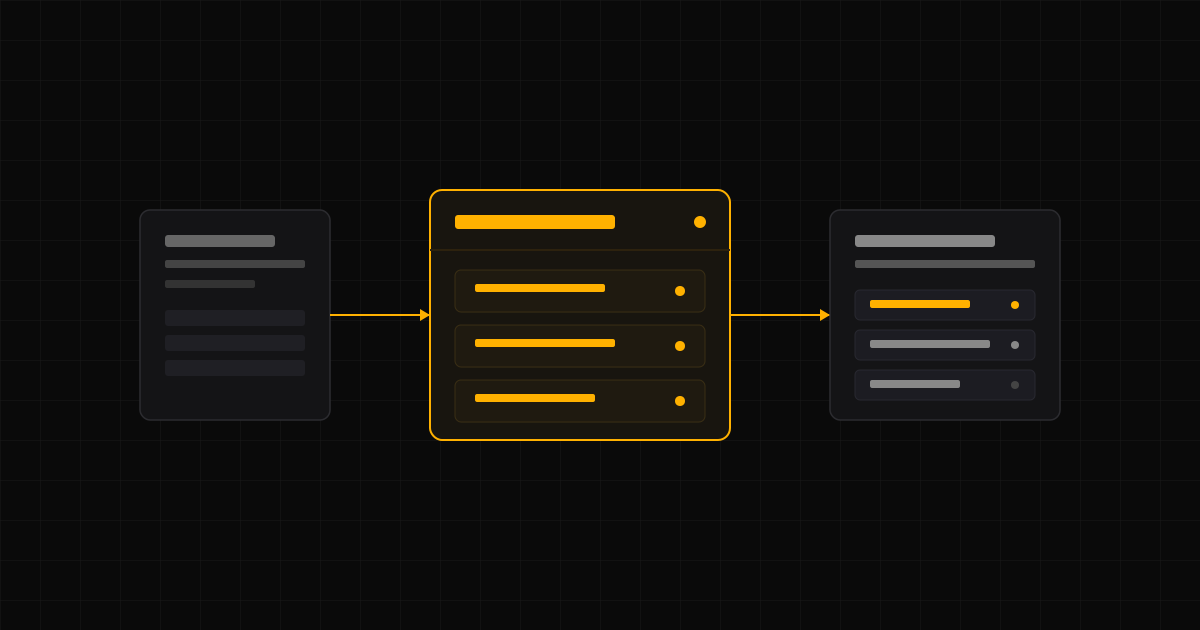
It requires placing an automated operational layer between inbound customer documents, internal ledgers, and downstream suppliers:
1. Straight-through document parsing and order staging
When a customer purchase order arrives via email or upload, automated document extraction engines parse the file immediately.
The system reads line-item tables, maps customer part numbers to internal product catalog SKUs, validates pricing against current contractual rate cards, and checks live inventory balances.
If the order is complete, correct, and matches approved commercial rules, the transaction is posted directly into the ERP. Pick lists are staged in the warehouse within seconds of order receipt, with zero manual data entry.
2. Exception isolation and validation quarantine
Orders should only reach human office staff when a genuine operational exception occurs:
- A requested SKU is discontinued or out of stock.
- Quoted unit pricing differs from the customer's purchase order by more than allowable tolerances.
- The delivery address fails standardized postal verification.
When an exception is detected, the system quarantines only the disputed line item, flagging the exact variance for a human coordinator to resolve. Meanwhile, clean line items and standard orders continue flowing straight to fulfillment without delay.
3. Programmatic supplier order coordination
When an order requires back-to-back supplier purchasing, the system triggers procurement workflows autonomously.
Supplier purchase orders are generated programmatically based on approved vendor agreements, routed to suppliers via structured digital channels, and logged into accounts payable ledgers.
When suppliers confirm delivery dates via email or portal notifications, the system captures the confirmation dates and updates the master project timeline automatically.
4. Proactive, event-driven customer milestone telemetry
Eliminate manual status inquiries by providing continuous, automated delivery transparency.
Every milestone in the physical fulfillment journey—order acceptance, warehouse pick confirmation, dispatch tracking generation, and delivery verification—triggers automated, structured status notifications to the customer.
When buyers receive proactive updates at every stage of the shipment, inbound status phone calls and emails collapse to near zero.
Scaling physical distribution on existing office headcount
When the administrative paper trail surrounding physical goods is automated, the entire commercial model becomes elastic:
Compressing order-to-dispatch cycle times
Removing manual transcription and approval delays cuts days off the order fulfillment cycle. Orders received at 14:00 are picked, packed, and staged for dispatch the same afternoon, dramatically improving customer satisfaction and retention.
Eliminating mis-shipments and costly returns
Manual data transcription is the primary cause of incorrect shipments. Automated SKU matching and price verification eradicate clerical errors, reducing expensive return freight costs, restock handling, and billing credit disputes.
Expanding revenue throughput on lean fixed overhead
By freeing office coordinators from routine data entry and status reporting, existing administrative teams can comfortably handle double or triple the daily order volume.
The business expands its distribution footprint and scales revenue aggressively without experiencing the traditional surge in administrative overhead.
Physical goods belong in warehouses and transport networks, not trapped in office email queues.
This is the kind of work Kalvron builds systems to run continuously. By deploying connected AI systems that parse customer orders, coordinate supplier POs, and automate delivery tracking inside existing enterprise ERPs, organizations eliminate back-office bottlenecks, accelerate fulfillment velocity, and scale physical operations cleanly.
Find out what your business can stop doing by hand.
In 20 minutes, we map your workflow and show you where an AI OS fits. No pitch. Just the diagnosis.
Book a call